Mar 052013
 

random-numbers

Some say we’re living in a “post-PC” world, but malware on PCs is still a major problem for home computer users and businesses.

The examples are everywhere: In November, we reported that malware was used to steal information about one of Japan’s newest rockets and upload it to computers controlled by hackers. Critical systems at two US power plants were recently found infected with malware spread by USB drives. Malware known as “Dexter” stole credit card data from point-of-sale terminals at businesses. And espionage-motivated computer threats are getting more sophisticated and versatile all the time.

In this second installment in the Ars Guide to Online Security, we’ll cover the basics for those who may not be familiar with the different types of malware that can affect computers. Malware comes in a variety of types, including viruses, worms, and Trojans.

Viruses are programs that can replicate themselves in order to spread from computer to computer, while targeting each PC by deleting data or stealing information. They can also change the computer’s behavior in some way.

“Almost all viruses are attached to an executable file, which means the virus may exist on a system but will not be active or able to spread until a user runs or opens the malicious host file or program,” Cisco notes. “When the host code is executed, the viral code is executed as well. Normally, the host program keeps functioning after it is infected by the virus. However, some viruses overwrite other programs with copies of themselves, which destroys the host program altogether. Viruses spread when the software or document they are attached to is transferred from one computer to another using the network, a disk, file sharing, or infected e-mail attachments.”

READ MORE:  Viruses, Trojans, and worms, oh my: The basics on malware | Ars Technica.


Mar 052013
 

tweetdeck

Twitter will shut down multiple TweetDeck apps to focus on the product’s web-based version, the microblogging service announced Monday.

In yet another sign of the battle between social media’s two biggest players, Facebook integration will be removed, too.

The announcement was met largely with a chorus of “nooooooooo,” “whyyyyyyy” and “gaaaaaaaah” on social media, reflecting TweetDeck’s widespread popularity with hardcore Twitter users.

TweetDeck AIR, TweetDeck for iPhone and TweetDeck for Android will be removed from their respective app stores in May, and stop working soon after, according to a TweetDeck blog post.

“To continue to offer a great product that addresses your unique needs, we’re going to focus our development efforts on our modern, web-based versions of TweetDeck,” the post says.

READ MORE:  Twitter Killing TweetDeck for iPhone and Android.


Mar 052013
 

facebook

Facebook today confirmed dwindling engagement with public posts to subscribers cited by The New York Times’ Nick Bilton, other journalists, and I, but calls us isolated cases, noting public figures with more than 10,000 fans are now getting 34 percent more Likes and comments than a year ago. While Facebook often changes the news feed to improve the user experience, the inconsistency is irksome.

So here’s the story. Yesterday, Nick Bilton of the New York Times wrote that when using Facebook’s Twitter-esque Subscribe feature to post public updates to his subscribers, he’s getting a lot fewer Likes and comments than a year ago. He suggested this is because Facebook is showing more ads instead.

Other journalists including me cited similar experiences, where our Facebook follower counts had grown significantly, but we were getting equal or less engagement now than in the months after Subscribe launched. I suggested that along with the presence of ads, people sharing more posts that compete for news feed space and Facebook’s tendency to give more feed presence to new products may have been responsible for the drought.

In a bit of damage control, Facebook sent out the following statement, hoping to frame these cases as flukes. Here’s the full-text, with my comments in brackets.

READ MORE:  Facebook Admits Likes Are Down For Some Celebrities’ Posts, But Claims Up 34% For Most | TechCrunch.


Mar 052013
 

opera-beta

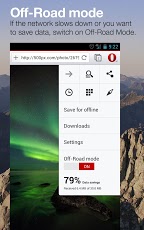
The first results of Operas WebKit brain transplant are now available for people to try: a beta version of Opera for Android.The new version uses Android-native user-interface elements but preserves many Opera features such as Speed Dial. It gets some new features, too, such as Off-road Mode to enable a proxy-browsing technology designed for slow network connections and the Discovery tool for people who want to browse content tailored to their interests.

READ MORE:  Operas overhauled Android browser now in beta | Internet & Media – CNET News.


Mar 042013
 

Facebook-like-button

This presentation on “6 Social Media Tips for Traditional Media” was presented by Erica Swallow on Friday, June 25, 2010 at Social Media Brasil (http://www.socialmediabrasil.com.br/), the largest social media conference in Brazil.

The presentation cover six tips that online publishers should consider when implementing a new social media strategy or improving upon an existing strategy.


via Six Social Media Tips for Traditional Media.


Mar 042013
 

imgres

When it comes to keyword research, there are a number of great articles out there telling you where to look, what tools to use, and how to get started. Instead of focusing on the traditional tactics, I want to focus on some other ways businesses can identify and evaluate keywords using real customer data.

Internal site search

If you have an internal site search function, you’re potentially sitting on a wealth of keyword data. Visitors coming to your website or blog often use the site search function to find information on the company and its products, or to locate pieces of content they’ve read before.

The great thing about site search is it not only helps you discover keywords your customers are using, it can also help you identify navigational or content issues. If your customers are searching for something, it likely means they are having trouble finding what they are looking for. Does that content exist on the site? If so, you need to make it easier to locate. If it doesn’t, get cracking!

Google Analytics will track these internal searches for you. To enable site search, go to your profile settings and set to “Do Track Site Search.” If you need help identifying parameters, head over to the Google Analytics site for more information.

READ MORE:  3 fresh ways to look at keywords – iMediaConnection.com.


Mar 042013
 

Database_3

NoSQL databases have made it possible to store more data faster and cheaper than ever before. Web giants like Google, Amazon and Facebook have come to depend on them in a big way. But they have some fundamental drawbacks that prevent them from handling many software applications. And FoundationDB wants to change that.

FoundationDB is the company behind the new proprietary database of the same name, and it claims to offer the performance benefits of NoSQL without many of the well-known trade-offs. The product has been available to a small group of alpha testers since January 2012, but on Monday, the company is making it available to the world at large.

The NoSQL movement grew out of papers published in 2006 and 2007 by Amazon and Google that described data storage systems distributed across hundreds or even thousands of cheap servers. These papers inspired open source imitators like Cassandra, Hbase, and Riak. But to achieve the mammoth scale that they did, these databases had to break with an old database tradition called “ACID.”

ACID stands for “atomicity, consistency, isolation, durability.” Together, these properties ensure that when you make a change to a database — or a series of changes — those changes are either recorded reliably and permanently or rejected completely.

READ MORE: Database House Wants You to Stop Dropping ACID 


Feb 192013
 

 putlook-image

Outlook.com officially launched Tuesday, marking the demise of its predecessor, Hotmail.

Nearly seven months after unveiling a preview of the email service last July, Microsoft announced the end of its beta run in a blog post.

Microsoft, which acquired Hotmail in 1997, said it will switch users to the new service “soon,” but won’t force them to change their emails to an “outlook.com” address. It added that all users should expect to see the change take place by this summer.

“Everything from their @hotmail.com email address, password, messages, folders, contacts, rules, vaation replies, etc. will stay the same, with no disruption in service.”

The software giant also revealed that over 60 million people are actively using Outlook.com.

READ MORE >>  Outlook.com Officially Replaces Hotmail, Boasts 60M Users.


Feb 192013
 

mailonline

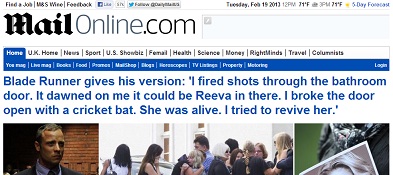
WITH ITS FOUR-FOOT-LONG HOME PAGES AND HUNDREDS OF SIDEBAR IMAGES, THE MAIL ONLINE BREAKS EVERY RULE OF WEB DESIGN. IT’S ALSO WINNING THE WEB AND DESIGN AWARDS.

During the average workday, I allow myself to take a couple “Internet breaks,” little bursts of Tumblr and Gawker and other forms of web candy that tug at my attention span like a needy kid. There’s one web threshold I never step over on a weekday, though: the Mail Online. The online outlet of the British tabloid is a one-way ticket to an hours-long surfing spree of celebrity gossip and moral outrage. It’s not web candy–this is web crack.

And it’s not just me. The Mail Online now outperforms The New York Times, The Guardian, and pretty much every other online news property in terms of unique visitors. It generated almost $40 million last year, an increase of 500% since 2008. I’ve always wondered at the remarkable magnetic pull of the website, which isn’t particularly beautiful and isn’t known for its in-depth reportage. “Mail Online breaks just about every web design rule in the book,” Jakob Nielsen yes, that Nielsen has said of the site. Yet, as Nielsen adds, “the traffic figures speak for themselves.” What keeps so many of us coming back for more heaping servings of non-stories, even when we know that’s what we’re getting?

MORE:  4 Lessons From The Web’s Most Ruthlessly Addictive Site


Feb 132013
 

So far it ain’t so, but some form of DRM in HTML is becoming a more likely possibility every day.

The W3C’s HTML Working Group recently decided that a proposal to add DRM to HTML media elements — formally known as the Encrypted Media Extensions proposal — is indeed within its purview and the group will be working on it.

That doesn’t mean that the Encrypted Media Extensions proposal will become a standard as is, but it does up the chances that some sort of DRM system will make its way into HTML.

The Encrypted Media Extensions proposal — which is backed by the likes of Google, Microsoft, Netflix and dozens of other media giants — technically does not add DRM to HTML. Instead it defines a framework for bringing a DRM system, or “protected media content” as the current draft puts it, to the web.

MORE:  DRM for the Web? Say It Aint So | Webmonkey | Wired.com.